Abstract:
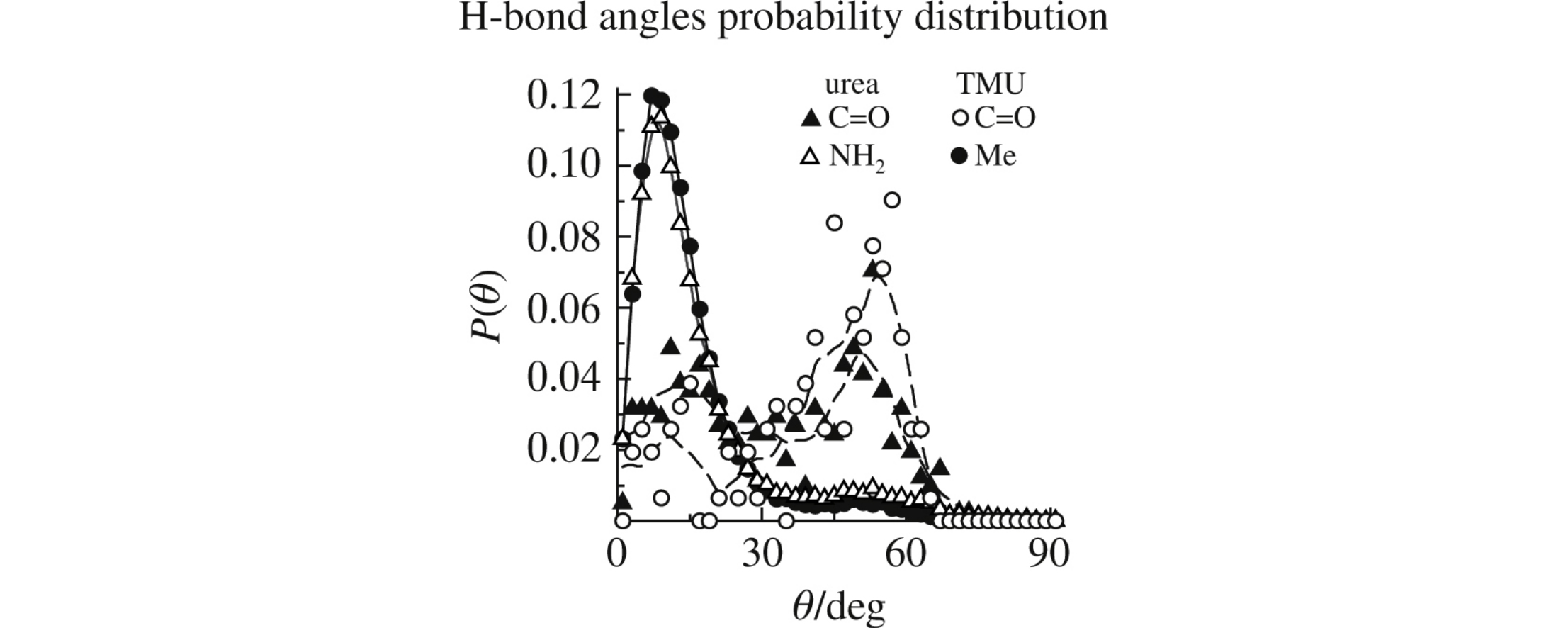
Molecular dynamic simulation of the hydrophilic urea and hydrophobic tetramethylurea aqueous solutions using the random network model of liquid water reveals that apolar Me groups induce an increase in the population of water molecules with linear and shorter H-bonds in their first hydration shell, whereas the carbonyl oxygen atom causes an opposite effect with elevation in the population of high angle/distance water molecules pairs. This behavior of water is the major reason for opposite changes in the heat capacity of hydration for apolar and polar species.
Citation:
M. A. Krestyaninov, A. V. Kustov, “Heat capacity effects associated with urea and tetramethylurea hydration: insight from computer simulation”, Mendeleev Commun., 30:4 (2020), 522–524
Linking options:
https://www.mathnet.ru/eng/mendc1245
https://www.mathnet.ru/eng/mendc/v30/i4/p522
This publication is cited in the following 3 articles:













 Contact us: