| Mendeleev Communications |
|
|


|
|


|
This article is cited in 6 scientific papers (total in 6 papers) Communications Influence of synthesis temperature on structural and magnetic properties of magnetoferritin L. Balejčíkováab, J. Jozef Kováča, V. M. Garamusc, M. V. Avdeevd, V. I. Petrenkode, L. Almásyfg, P. Kopčanskýa a Institute of Experimental Physics, Slovak Academy of Sciences, Kosice, Slovakia b Institute of Hydrology, Slovak Academy of Sciences, Bratislava, Slovakia c Helmholtz-Zentrum Geesthacht, Zentrum für Material und Küstenforschung, Geesthacht, Germany d Joint Institute of Nuclear Research, Dubna, Moscow region, Russian Federation e T.G. Shevchenko Kiev National University, Kiev, Ukraine f Institute for Solid State Physics and Optics, Wigner Research Centre for Physics, Hungarian Academy of Sciences, Budapest, Hungary g Department of Chemistry, Southwest University of Science and Technology, Mianyang, P.R. China 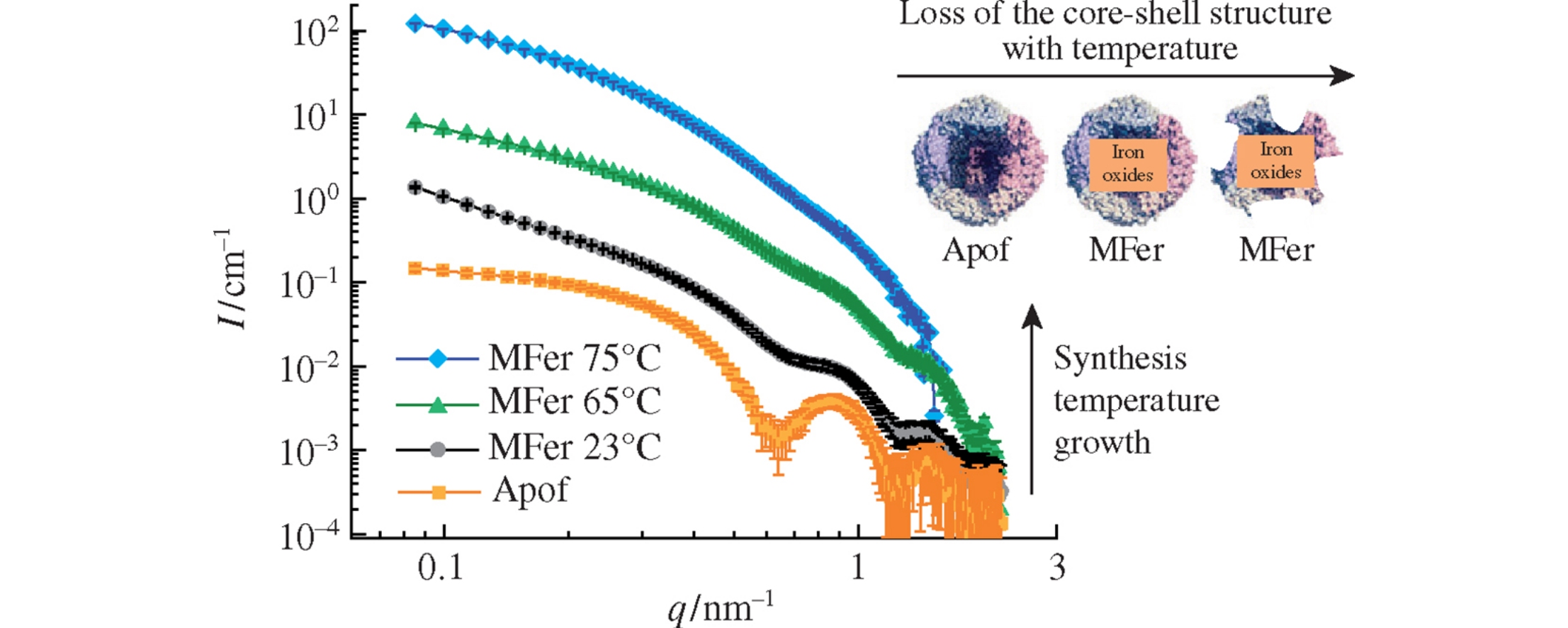
Bibliographic databases:
 Citation: L. Balejčíková, J. Jozef Kováč, V. M. Garamus, M. V. Avdeev, V. I. Petrenko, L. Almásy, P. Kopčanský, “Influence of synthesis temperature on structural and magnetic properties of magnetoferritin”, Mendeleev Commun., 29:3 (2019), |


|





|
 Contact us:
 |
Terms of Use
|
Registration to the website |
Logotypes |
|