| Mendeleev Communications |
|
|


|
|


|
Communications Polylactic acid-based scaffolds modified by hyaluronic acid U. V. Khomutovaab, O. A. Laputac, A. G. Korzhovaa, A. A. Bryuzginaa, Y. G. Shapovalovaa, Yu. Y. Akhmadeevb, V. V. Shugurovb, I. A. Kurzinaac a National Research Tomsk State University, 634050 Tomsk, Russian Federation b Institute of High Current Electronics, Siberian Branch of the Russian Academy of Sciences, 634055 Tomsk, Russian Federation c Surgut State University, 628400 Surgut, Russian Federation 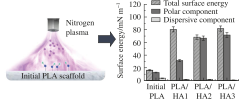
Citation: U. V. Khomutova, O. A. Laput, A. G. Korzhova, A. A. Bryuzgina, Y. G. Shapovalova, Yu. Y. Akhmadeev, V. V. Shugurov, I. A. Kurzina, “Polylactic acid-based scaffolds modified by hyaluronic acid”, Mendeleev Commun., 35:6 (2025), |

|





|
 Contact us:
 |
Terms of Use
|
Registration to the website |
Logotypes |
|