Russian Chemical Reviews
RUS  ENG    JOURNALS   PEOPLE   ORGANISATIONS   CONFERENCES   SEMINARS   VIDEO LIBRARY   PACKAGE AMSBIB  
General information
Latest issue
Archive
Impact factor
Guidelines for authors

Search papers
Search references

RSS
Latest issue
Current issues
Archive issues
What is RSS


Usp. Khim.:
Year:
Volume:
Issue:
Page:
Find


Personal entry:
Login:
Password:
Save password
Enter
Forgotten password?
Register


Russian Chemical Reviews, 2024, Volume 93, Issue 5, RCR5120
DOI: https://doi.org/10.59761/RCR5120
 

This article is cited in 5 scientific papers (total in 5 papers)

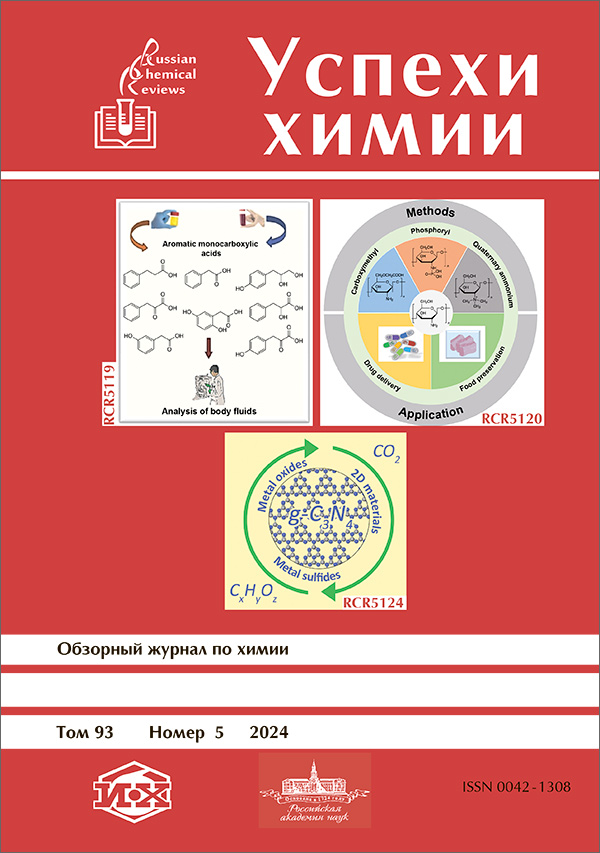
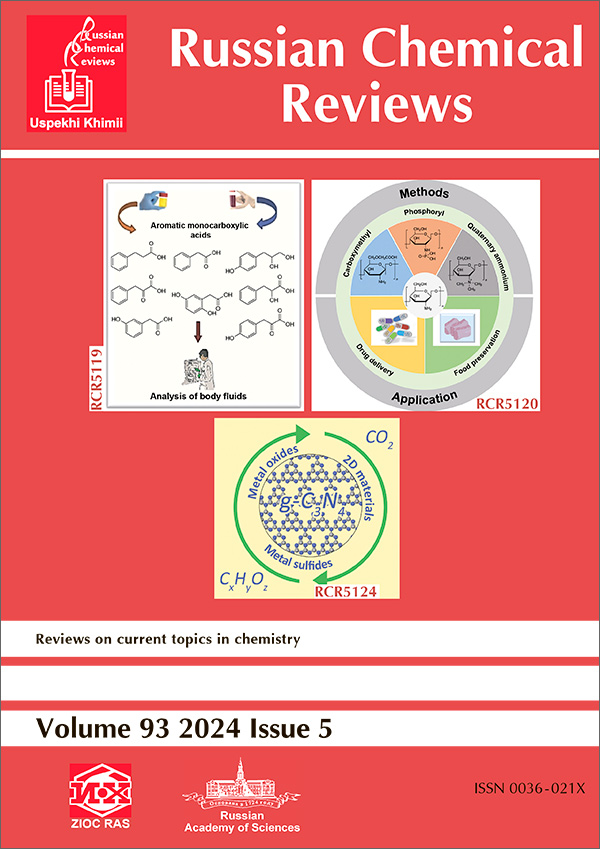
Hydrophilic chitosan: modification pathways and biomedical applications

J. Donga, X. Chena, Ya. Lia, M. Luana, X. Yanga, H. Chenb, M. Kooshaac, Yu. Zhaib, R. F. Fakhrullinde

a School of Chemistry and Chemical Engineering, Qilu University of Technology, Shandong Academy of Sciences, Jinan, China
b Interventional department of Shandong Provincial Cancer Hospital Affiliated to Shandong First Medical University, Jinan, China
c Faculty of New Technologies and Engineering, Shahid Beheshti University, Tehran, Iran
d Institute of Fundamental Medicine and Biology, Kazan Federal University, Kazan, Republic of Tatarstan, Russian Federation
e Institute for Regenerative Medicine, I.M.Sechenov First Moscow State Medical University, Moscow, Russian Federation
Abstract: Chitosan, a natural and abundant polysaccharide, offers several advantageous properties, such as excellent biocompatibility, biodegradability, and antimicrobial activity, making it a highly versatile material. However, its extensive application is hindered by its insolubility in water and most organic solvents, due to numerous intramolecular/intermolecular hydrogen bonds. To overcome this limitation and optimize its benefits, chitosan is often chemically modified to enhances its utility in various industries. Biomedical materials, environmental management, biological papermaking, food preservation, and the daily chemical industry are a few examples. Modified chitosan retains the inherent properties of chitosan and acquires new physicochemical characteristics as a result of introduced functional groups. Hydrophilic modifications typically include carboxylation, phosphorylation, and quaternary ammonium modification reactions. The specific properties and applications of chitosan derivatives depend on the grafted groups. This review summarizes the reaction conditions, properties, and applications of hydrophilic chitosan derivatives in drug delivery and food preservation, serving as a reference for the development and use of chitosan-based biomaterials.
Bibliography includes 128 references.
Keywords: chitosan, hydrophilic modification, property, applications.
Received: 12.02.2024
Bibliographic databases:
Document Type: Article
Language: English
Original paper language: Russian


Citation: J. Dong, X. Chen, Ya. Li, M. Luan, X. Yang, H. Chen, M. Koosha, Yu. Zhai, R. F. Fakhrullin, “Hydrophilic chitosan: modification pathways and biomedical applications”, Usp. Khim., 93:5 (2024), RCR5120; Russian Chem. Reviews, 93:5 (2024), RCR5120
Linking options:
  • https://www.mathnet.ru/eng/rcr4462
  • https://doi.org/10.59761/RCR5120
  • This publication is cited in the following 5 articles:
    Citing articles in Google Scholar: Russian citations, English citations
    Related articles in Google Scholar: Russian articles, English articles
    Uspekhi Khimii Uspekhi Khimii
     
      Contact us:
     Terms of Use  Registration to the website  Logotypes © Steklov Mathematical Institute RAS, 2025