Abstract:
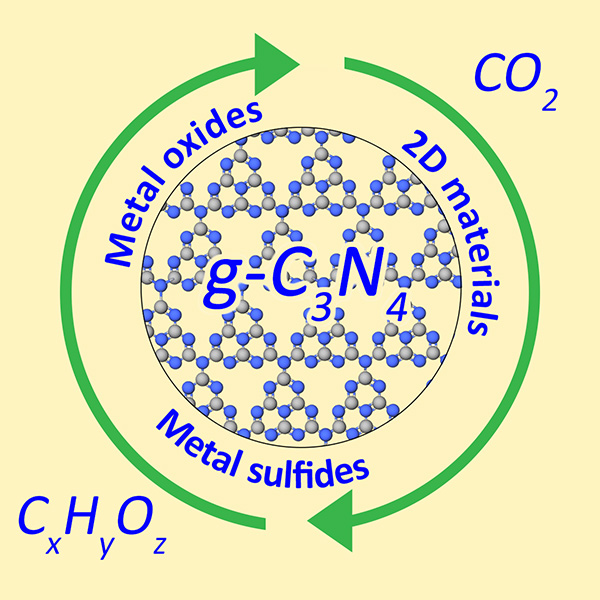
In recent years, the interest of the global scientific community in the problems of CO2 recycling and returning to the carbon cycle has markedly increased. Among various CO2 transformation processes, photocatalytic reduction is one of the most promising. Currently, much attention is paid to photocatalysts based on graphitic carbon nitride, since the use of g-C3N4 makes it possible to perform CO2 reduction under visible or solar radiation. To increase the efficiency of this process, g-C3N4 is subjected to various modifications; the most popular and promising approach is the synthesis of composite photocatalysts based on g-C3N4 with other semiconductors to form heterostructures. Depending on the type of semiconductor, transfer of photogenerated charges in these systems can occur by various mechanisms, which largely determine the direction of the process and the rate of formation of reaction products. This review addresses studies on the synthesis of composite photocatalysts based on g-C3N4, with emphasis being placed on the mechanisms of charge transfer and the distribution of products of CO2 reduction.
Bibliography — 235 references.
Keywords:
photocatalysis; photocatalyst; heterogeneous catalysis; graphitic carbon nitride; carbon dioxide reduction; charge transfer mechanism; heterostructures; solar energy.
Received: 26.03.2024
Bibliographic databases:
Document Type:
Article
Language: English
Original paper language: Russian
Citation:
R. F. Alekseev, A. A. Saraev, A. Yu. Kurenkova, E. A. Kozlova, “Heterostructures based on g-C3N4 for photocatalytic CO2 reduction”, Usp. Khim., 93:5 (2024), RCR5124; Russian Chem. Reviews, 93:5 (2024), RCR5124
Linking options:
https://www.mathnet.ru/eng/rcr4463
https://doi.org/10.59761/RCR5124
This publication is cited in the following 12 articles:









 Contact us: