|
|
Scientific seminar on the differential and functional differential equations
November 20, 2025 16:30, Moscow, st. Ordzhonikidze 3, room. 458
|
 |
|
 |
|
|
|
Theory of hidden oscillations and its applications
N. Kuznetsov
St. Petersburg State University, Mathematics and Mechanics Faculty
|
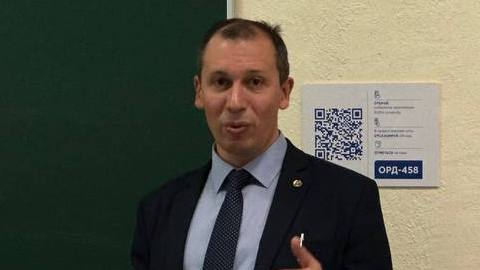
 Photo Gallery Photo Gallery
|
Abstract:
The development of global stability theory, bifurcation theory, chaos theory, robust control theory, and new computing technologies has allowed us to take a fresh look at a number of well-known theoretical and practical problems of dynamical systems analysis and led to the emergence of the theory of hidden oscillations, which has become a modern stage in the development of A.A. Andronov's theory of oscillations. The basis of the theory of hidden oscillations is a new classification of oscillations and attractors as self-excited or hidden. By analogy with the concepts of global and local attractors, the concepts of hidden attractor or hidden oscillation reflect the property of the region of attraction of an object in phase space: the region of attraction does not concern the equilibrium states of the system.
The theory of hidden oscillations has proved to be in demand in many theoretical and actual engineering problems in which hidden attractors (their absence or presence and location) play an important role. For many control systems, the transition of the system state to a hidden attractor caused by external disturbances leads to undesirable behavior and is often the cause of accidents and man-made disasters.
|
|


